Kenya Group Safari Vehicle Seating: What to Ask Before You Book
A “seven-seat Land Cruiser” tells you less than you might think. The row layout, roof opening, luggage space and number of people standing at a sighting will shape every day of your safari.
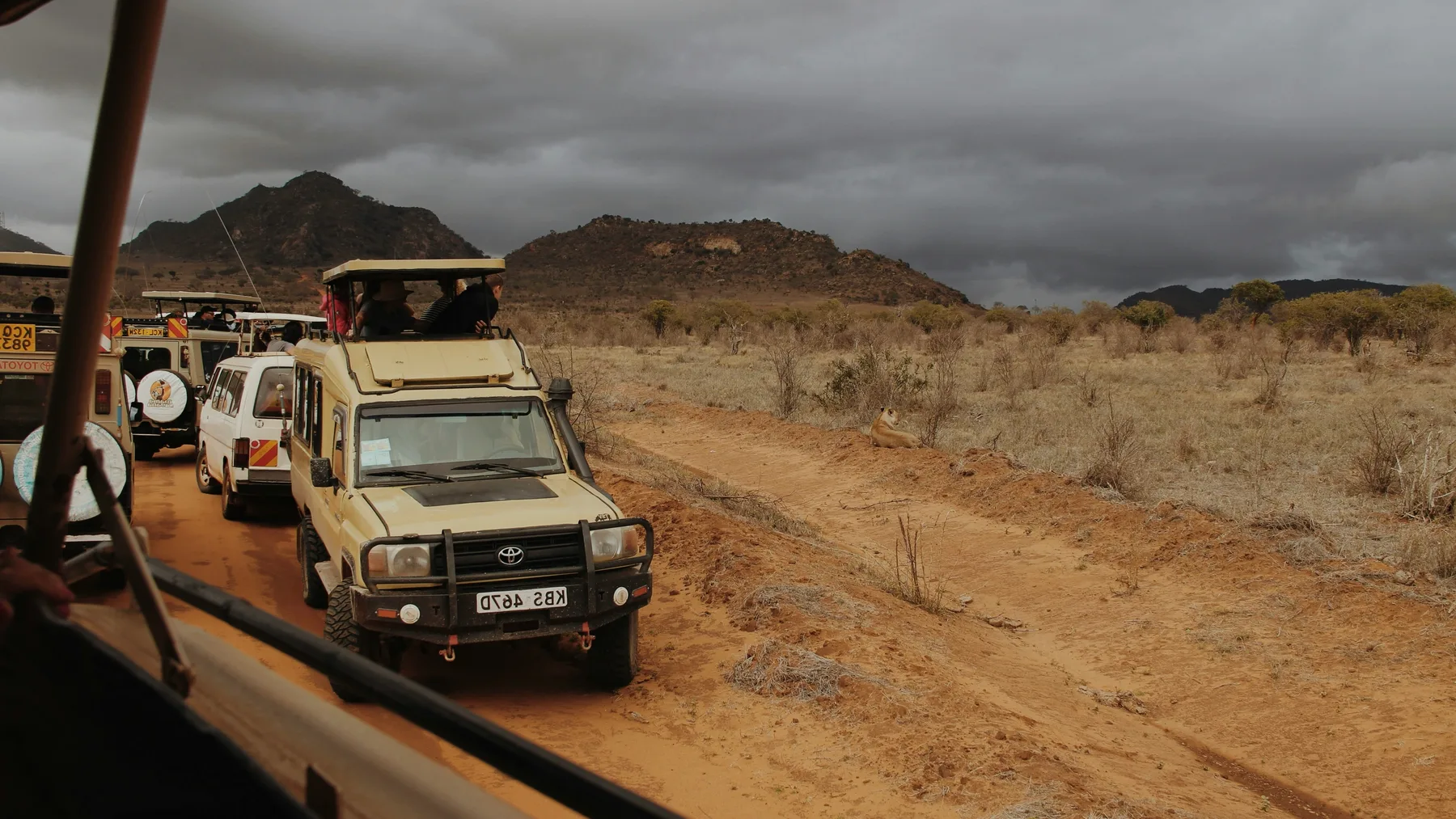
For a comfortable Kenya group safari, do not book by the vehicle’s legal maximum alone. Ask for the exact seat plan, how many guests will use each row, whether every traveller can reach the pop-up roof, and where the luggage goes on transfer days.
Six adults may fit into a safari Land Cruiser and still have very different experiences. Four keen photographers might want one person per roof position and a spare seat for equipment. A family of six may be perfectly happy with a well-planned three-row layout. Eight friends may be better in two vehicles than squeezed into one simply to reduce the headline price.
This guide explains the vehicles commonly used on Kenyan road safaris, how shared and private arrangements differ, and the questions that prevent seat arguments after the first lion sighting.
What this guide covers
- Land Cruiser, safari van or camp vehicle
- What the rows really feel like
- Pop-up roofs, windows and standing space
- The best setup for different group sizes
- Private versus shared safari vehicles
- Luggage on a multi-park safari
- How the route changes the decision
- Children, older travellers and mobility
- Photography and birding groups
- What travellers say online
- Questions to send before paying
- Frequently asked questions
Land Cruiser, safari van or open camp vehicle?
| Vehicle | Where it works well | What to check |
|---|---|---|
| Extended 4×4 safari Land Cruiser | Multi-park road circuits, wet-season travel, rougher tracks, photography and groups carrying luggage between lodges | Number of usable roof positions, rear-row access, window shape, suspension, seat belts and luggage compartment |
| Pop-up-roof safari van | Budget-conscious circuits on established routes, smaller groups and many dry-season itineraries | Two-wheel or four-wheel drive, ground clearance, roof opening, air flow, rear visibility and luggage space |
| Open-sided camp vehicle | Game drives operated from selected conservancy or private-camp stays | Whether it is available exclusively to your group, weather protection, age rules and whether it can leave the operating area |
| Minibus or coach for transfers | Airport transfers, conferences, schools and large groups moving between hotels | Whether separate safari vehicles take over for game drives, baggage capacity and how the group divides |
A Land Cruiser is not automatically luxurious, and a van is not automatically unsuitable. A carefully maintained van with five guests can be more comfortable than a stretched Land Cruiser filled to its last seat. Ask NLS for the contracted configuration rather than relying on a stock photograph.
On a route such as the 10-day Kenya group safari, the vehicle carries people and bags from the Masai Mara to Lake Nakuru, Naivasha and Amboseli. For a fly-in stay, the aircraft handles the long transfer and the camp may provide an open or closed vehicle shared with other guests. Those are different products, even if both itineraries say “game drives included.”
What three safari rows feel like in practice
The front passenger seat
The front seat has a broad windscreen view and easy conversation with the guide. It may not sit beneath the main roof opening, and looking across the driver can be awkward when an animal is on the opposite side. It is often useful for a trip leader, an older guest who wants easier access, or someone who prefers to remain seated.
The first row behind the guide
This row is usually easy to reach and close to the guide’s explanations. In many conversions it has good access to the front part of the pop-up roof. Check whether a cool box, console or raised floor changes legroom. A nominal three-person bench can feel crowded when everyone has a camera and a day bag.
The middle and rear rows
These rows can offer excellent elevated viewing through the roof, but access varies. A wheel arch, narrow aisle or inward-facing jump seat can make the rear less comfortable for a tall adult. Side windows may slide in a way that leaves one passenger looking through a frame. A photograph of the actual interior answers more than a promise that everyone has a window.
The empty seat that has value
A spare place is not wasted on a long safari. It holds a camera bag while the vehicle is moving, gives two people room to change sides, and lets a tired child stretch out safely at a lunch stop. The cost per person may rise, but the benefit is felt for every hour spent on the road.
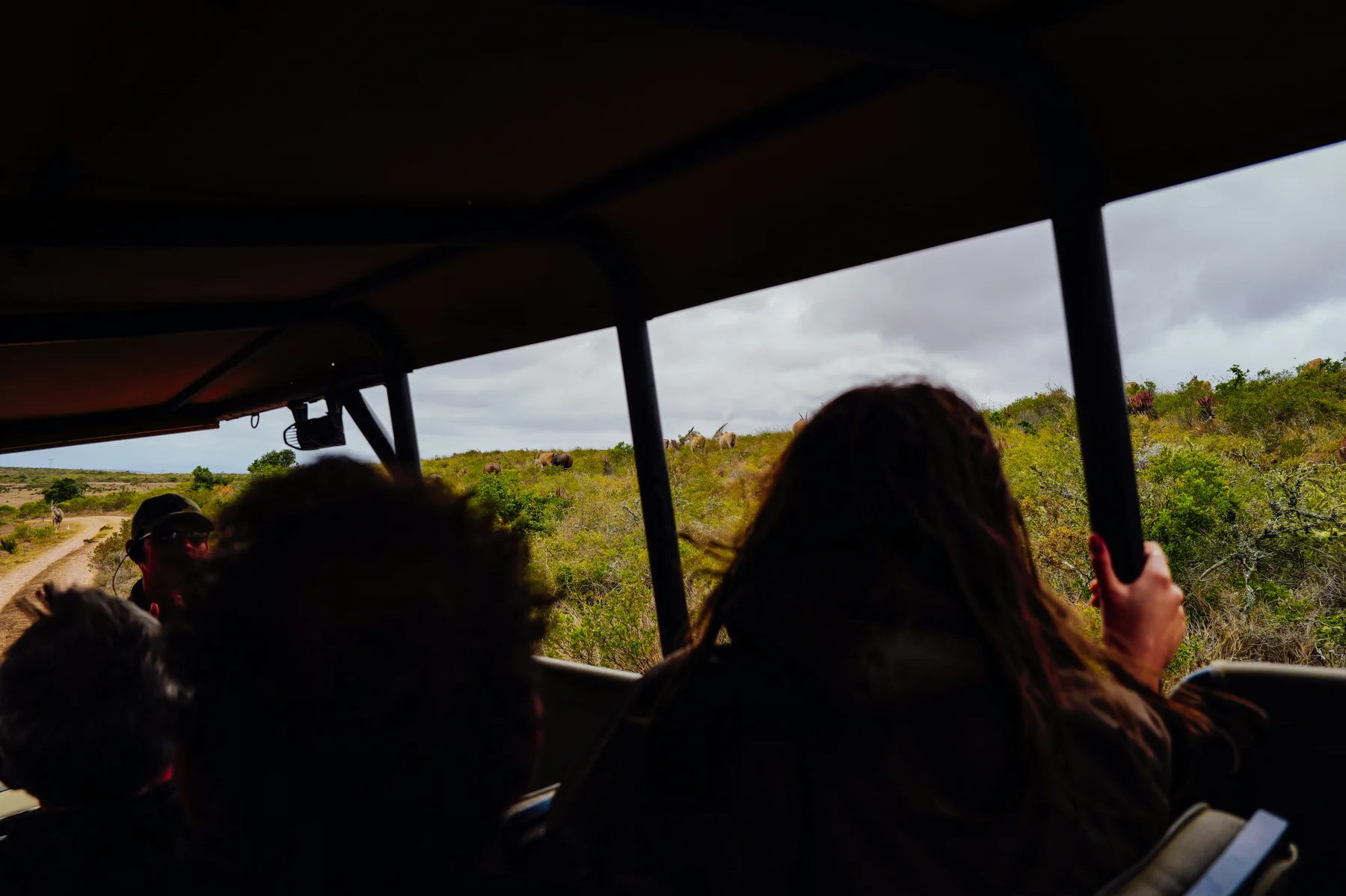
Pop-up roofs, windows and the view at a sighting
Most closed Kenyan safari vehicles used for road circuits have a roof that lifts while the vehicle is stationary or moving slowly in permitted areas. Guests stand on the floor and look through the opening. The raised roof provides some shade, but sun direction, rain and the vehicle’s position still matter.
The important measurement is not simply the length of the roof. Ask how many adults can stand without blocking one another and whether each row reaches the opening. A low roof edge can be uncomfortable for a tall traveller. A child may need an approved booster or may see better while seated at an open window, subject to the guide’s safety instructions.
Windows matter when dust, rain or cold morning air keeps everyone seated. Sliding panes can divide the view. Fixed glass may reflect inside the cabin. Photographers should ask whether windows open far enough for a lens and whether beanbags are available or permitted. Nobody should sit on the roof or place arms outside while the guide says it is unsafe. Kenya Wildlife Service park rules require visitors to remain in vehicles except in designated areas and to follow the directions that protect people and wildlife.
Open-sided camp vehicles create a different feeling. They offer an unobstructed side view and quick camera movement, but wind, dust and rain are more immediate. They are commonly tied to a particular camp or conservancy and should not be assumed on a road circuit. Confirm whether drives are private or shared, how many rows the vehicle has and whether the back row sits higher than the front.
Vehicle ideas for groups of four, six, eight and twelve
| Group | A comfortable starting point | When to add space |
|---|---|---|
| Two to four travellers | One private safari Land Cruiser or van, with unused seats for bags and movement | Add a larger body or specialist setup for long lenses, mobility equipment or unusually heavy luggage |
| Five to six travellers | One well-configured extended Land Cruiser can work for a family or friends who understand the rows | Use two vehicles when each person expects a dedicated photography position or several adults are tall |
| Seven to eight travellers | Two safari vehicles are often more comfortable than filling every possible seat in one body | Keep one lead guide and agree how the vehicles communicate and alternate positions |
| Nine to twelve travellers | Two coordinated Land Cruisers, sometimes three for photography or generous space | Do not treat a transfer coach as the automatic game-drive vehicle |
| More than twelve | A planned fleet with named vehicle capacity, lead guide, luggage solution and meeting points | Add a separate baggage transfer only when the route, security and timing support it |
Two vehicles do not mean the group has to experience separate holidays. They can leave together, use radio or phone communication where coverage permits, meet at picnic sites and swap passengers by agreement. At a leopard sighting, one vehicle may have the better angle. The guides should rotate position courteously without crowding the animal or blocking other vehicles.
The extra vehicle changes the quotation because fuel, a guide, park vehicle fees and operating costs are not purely per-person expenses. That is why the main Kenya group safari guide should compare the same itinerary and room plan, not a crowded one-vehicle quote against a spacious two-vehicle quote.
Private group vehicle or shared departure
A private vehicle for your existing group
Your relatives, friends or colleagues occupy the vehicle. The guide can adjust breakfast departures, bathroom stops and the length of a sighting within park rules and the day’s route. Parents can return early when a child is tired. Birders can spend time with a species that another party might pass.
Private does not mean unrestricted. Park closing times, lodge meals, road safety, wildlife space and the guide’s professional judgment still apply.
A seat on a scheduled shared safari
You join travellers who may have different interests, budgets and onward plans. It can reduce the individual share of fixed vehicle costs and works well for sociable travellers with flexible expectations. The departure time, route and accommodation are normally less adaptable.
Ask the maximum number of guests, luggage allowance, guaranteed window arrangement and whether passengers join or leave at different points.
For a wedding party, family reunion or corporate team, a private existing-group safari usually provides the cleanest logistics. A solo traveller or couple may prefer a genuine scheduled departure. The private group safari guide compares the control an existing group gains over timing, rooms and daily decisions.
Where does the luggage go?
On a Nairobi, Mara, Nakuru and Amboseli road circuit, the bags travel with the group. Soft-sided luggage is easier to fit than large hard-shell cases. A rear compartment may be separated from passengers, but its size changes with the vehicle conversion. Roof racks can carry protected bags, although dust, rain, security and loading time must be considered.
Send the expected bag count before the vehicle is allocated. “Six passengers” could mean six compact duffels, or six large suitcases plus camera backpacks, a wheelchair and child equipment. Those are not the same transport request. If the group arrives with more luggage than declared, a separate vehicle or storage in Nairobi may be needed.
A fly-in itinerary is stricter. Small safari aircraft commonly use weight and shape limits that differ by operator and route. The exact allowance must come from the booked airline, not from a general safari article. Groups can sometimes store hard cases in Nairobi and travel with soft bags, but only if the return logistics make sense.
How the Kenyan route changes the choice
Masai Mara
The approach road, reserve or conservancy location and season affect comfort. Inside the wildlife area, patient positioning matters as much as mechanical capability. Migration months can be busy, so a responsible guide should preserve wildlife space rather than joining every cluster.
Amboseli
Open plains, swamp edges, dust and changing road conditions reward clear windows and good roof access. A dawn drive can be cool. Keep a fleece inside the cabin rather than buried beneath every suitcase.
Samburu and Ol Pejeta
Long road transfers make seat comfort and air flow especially important. Northern circuits may cover substantial distance before the wildlife drive begins. Build comfort stops into the day rather than treating the road time as invisible.
Tsavo and the coast
Tsavo’s scale can mean longer drives between sightings and lodges. Groups continuing to Diani, Mombasa or Watamu should compare road, SGR and flight connections, including the baggage handover at each stage.
A short Masai Mara group safari may tolerate a different setup from a ten-day circuit. An Amboseli group safari for photographers may deliberately run fewer people per vehicle. The season and timing guide explains the trade-offs. The itinerary and passenger list should decide the fleet.
Children, older travellers and mobility needs
Tell the planner who will find a high step, narrow aisle or rear bench difficult. A front or first-row seat may be easier, but it should be reserved before departure rather than negotiated each morning. Ask about grab handles, step height, seat belts, child restraints and space for mobility equipment. The correct restraint depends on the child and vehicle, so it needs direct confirmation.
Young children often enjoy shorter viewing periods than adults. A private family vehicle lets the guide return for lunch, choose a bathroom stop or finish before a late afternoon becomes miserable. Snacks, water, hats and a small activity bag should remain reachable. They should not be packed beneath the luggage.
For older relatives, the smoothest safari may use fewer hotel changes, two vehicles and lodges close to the main wildlife area. That can cost more than filling one vehicle, but it protects the reason everyone travelled together. The private group safari guide covers rooming, pace and family control in greater depth.
Vehicle planning for photographers and birders
Photographers need room to turn, support a lens and change sides without striking another camera. Four guests in a vehicle often creates a more useful working setup than six, but the body and roof design still decide the result. Ask whether beanbags are supplied, which surfaces support them, and whether charging is available. Carry spare batteries because a socket is not a guarantee.
A roof opening is useful for animals at eye level and distant subjects, while an open side or window can create a lower angle. Each has dust and safety trade-offs. Long lenses should be secured while the vehicle is moving. Nobody should pressure a guide to leave the track, crowd an animal or keep an engine position that prevents another vehicle from moving safely.
Birders may care less about an empty camera-bag seat and more about hearing the guide, opening windows quickly and stopping for small subjects. State that priority. A general Big Five group and a dedicated birding group can use the same Land Cruiser but require very different days.
What safari travellers say about vehicle space
These are individual opinions from public travel discussions. They do not describe every vehicle or guarantee the experience your group will have.
“I would never recommend a shared safari. Ever. Period.”
One traveller strongly preferred a private arrangement after discussing the value of controlling the pace. Other people in the same discussion noted that sharing can reduce each traveller’s portion of the fixed vehicle and guide cost.
“With the pop top, noone is in a middle seat, everyone gets a window seat.”
This traveller liked the visibility of a closed vehicle with a pop-up roof. Another contributor preferred an open-sided vehicle, showing why the vehicle description should go beyond the word “safari.”
“If you’re sharing a car, you will get frustrated fast.”
The comment came from a discussion about first-safari planning and reflected one person’s concern about competing interests inside a shared vehicle. A compatible shared group may feel differently.
A long-running Kenya travel-forum thread also shows why exact configuration matters. A traveller reported that a sliding window frame obstructed the view from one position in a seven-seat conversion. Other contributors described different bodies and layouts. The useful lesson is not that every seventh seat is bad. It is that a model name does not reveal the view from a particular row. See the original Tripadvisor forum discussion.
Fourteen questions to ask before you pay
- What exact vehicle type and body configuration will operate our safari?
- How many guests will be assigned to each vehicle on transfers and game drives?
- May we see current exterior and interior photographs of that configuration?
- How many forward-facing passenger seats have a three-point or lap seat belt?
- Does every row reach the pop-up roof comfortably?
- How many adults can stand at the roof opening at the same time?
- Do the side windows open, and does a frame obstruct any passenger position?
- Where will our declared luggage, camera bags and mobility equipment travel?
- Is the vehicle private to our party throughout the route?
- If we use two vehicles, who is the lead guide and how will the vehicles coordinate?
- Can we reserve an easy-access position for a named traveller?
- Are child restraints available and suitable for the child’s age and size?
- What happens if the assigned vehicle has a mechanical problem?
- Is the quoted vehicle allocation written into the proposal?
Also confirm the operator’s licences, insurance and the guide arrangement. Kenya’s Tourism Regulatory Authority oversees tourism enterprise licensing, while the National Transport and Safety Authority is the official source for road transport regulation. A traveller does not need to become a fleet inspector, but the booking should identify who is responsible for safe, licensed transport.
Kenya group safari vehicle seating FAQs
Does everyone get a window seat in a safari Land Cruiser?
Many safari conversions are described that way because passengers sit beside a side window or can stand beneath the pop-up roof. Ask for the exact layout. A window frame, aisle position or crowded roof can still change the usable view.
How many people should share one safari vehicle?
Four provides generous room in many vehicles. Five or six can work well for a family or friends in the right body. Photography groups often choose fewer people. The legal maximum is not automatically the comfortable maximum.
Is a Land Cruiser always better than a safari van?
No. A 4×4 Land Cruiser has advantages on rougher ground and many multi-park routes, but maintenance, passenger load, roof design and the actual road conditions matter. A lightly occupied, well-maintained van may suit some budgets and routes.
Are game drives private when we book as a group?
They can be, but it must be stated. A road itinerary may include a private vehicle while a fly-in camp stay uses shared camp drives. Confirm each section of the trip.
Can our group use two vehicles and stay together?
Yes. The guides can coordinate departures, picnic stops and return times. Vehicles may separate briefly to follow different interests or avoid crowding a sighting.
Where do suitcases go during a road safari?
They may go in a rear luggage compartment or protected roof storage, depending on the vehicle. Declare the size and number of bags before booking. Soft bags are usually easier to pack.
Can we rotate seats during the safari?
Yes, if the group agrees and the guide can make changes safely at a suitable stop. Reserve an easy-access seat for anyone with a physical need rather than forcing daily rotation.
Are open-sided vehicles used in Kenya?
Yes, especially at some camps and conservancies. They are not the default vehicle for every public-road circuit. Confirm whether the open vehicle is private, weather-protected and permitted on the planned route.
What vehicle is best for children?
A closed vehicle with seat belts, suitable restraints, shade and a private schedule is often practical. The exact child seat and installation must be confirmed for the child’s age, size and assigned vehicle.
What vehicle is best for safari photography?
A 4×4 with fewer photographers, useful roof and window positions, room for equipment and an experienced guide is a strong starting point. The preferred body depends on lens style, route and whether drives are road-based or camp-operated.
Will the vehicle have charging sockets and Wi-Fi?
Some have USB or power outlets, but this is equipment-specific. Wi-Fi and mobile coverage should not be assumed in wildlife areas. Carry charged power banks and spare camera batteries.
What should be written in the quotation?
The proposal should state vehicle type, private or shared use, number of vehicles, passenger allocation, route, luggage assumptions and any specialist equipment promised.
Vehicle rules and trip context
Post photography: Giusi Borrasi and Adrien Olichon on Unsplash.
Tell us who needs which seat
Include the route, adults and child ages, luggage, mobility needs, camera equipment and whether the group prefers maximum space or the most economical arrangement.